
Introduction
Sketches are the foundation of visual art, serving as the first step in expressing creative ideas on paper. Many beginners struggle with capturing proportion, perspective, and detail, often jumping straight to paintings and portraits without understanding the basics. Learning sketches allows artists to explore forms, experiment with composition, and develop confidence before committing to a full piece. In this guide, you will discover what sketches are, their different types, essential tools, step-by-step techniques, common mistakes to avoid, and practical tips to improve your skills efficiently.
What Are Sketches in Art?
Definition
A sketch is a simple, preliminary drawing that captures the essence of a subject without focusing on fine details. It can be rough or refined and is often used to plan a more detailed artwork.
Purpose of Sketches
- Quickly capture ideas
- Explore composition, shapes, and perspective
- Practice observation skills
- Serve as a blueprint for paintings and portraits
How Sketches Are Used by Beginners and Professionals
- Beginners: Focus on learning proportions, lines, and shading techniques
- Professional Artists: Use sketches to conceptualize complex artworks, plan paintings, or map out portraits before creating a final piece
Types of Sketches Explained
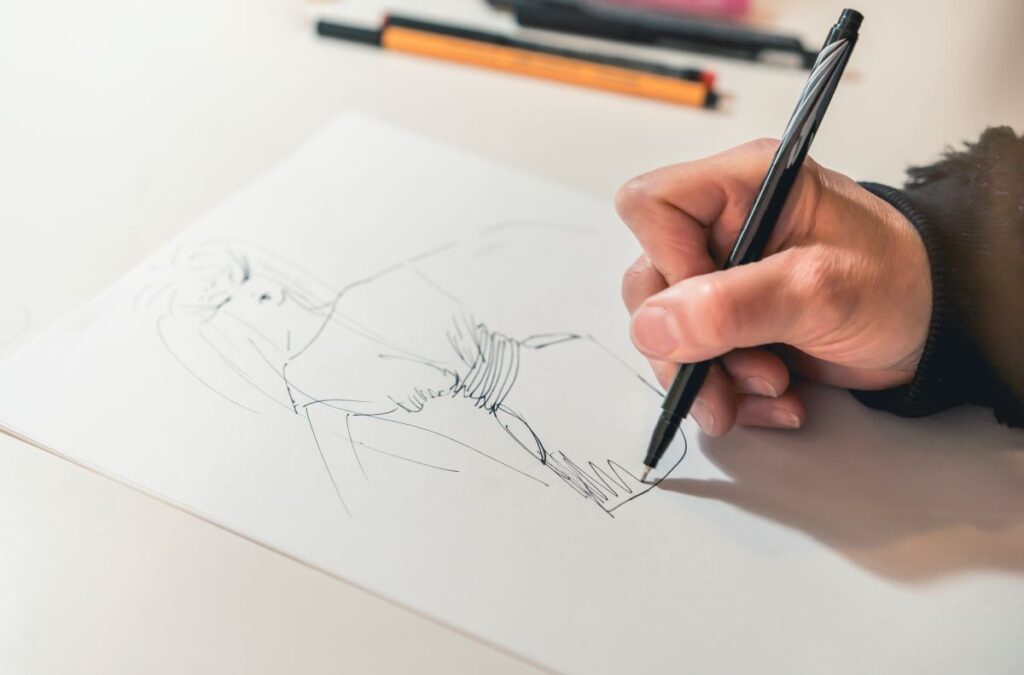
Sketches come in various styles depending on their purpose and the artist’s approach. Understanding these types helps you choose the right method for your practice.
Line Sketches
- Simple outlines without shading
- Ideal for learning shapes, forms, and composition
Gesture Sketches
- Quick, expressive sketches capturing motion or posture
- Common in figure drawing and animation
Shading Sketches
- Focus on light and shadow to add depth
- Introduce techniques like hatching, cross-hatching, and blending
Concept Sketches
- Preliminary drawings used in planning paintings, portraits, or design projects
- Often rough but conveys the core idea
Sketches vs Paintings and Portraits
Key Differences
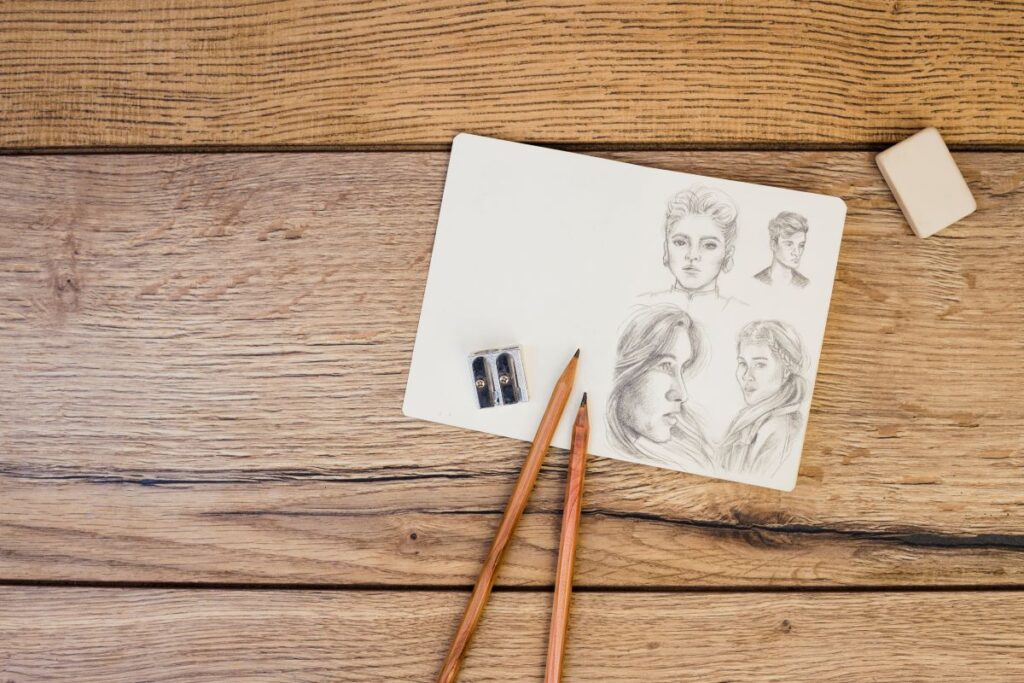
- Sketches: Quick, flexible, often monochromatic; used for planning and practice
- Paintings and Portraits: Detailed, polished, and complete artworks
When to Sketch vs When to Paint
- Sketch first: When exploring ideas, learning anatomy, or planning composition
- Paint or create portraits: After refining a sketch and understanding the proportions and details
How Sketches Lead to Finished Paintings and Portraits
- Sketches act as blueprints, allowing artists to test layouts, experiment with perspectives, and decide on final details
- They reduce mistakes in paintings and portraits by providing a reference
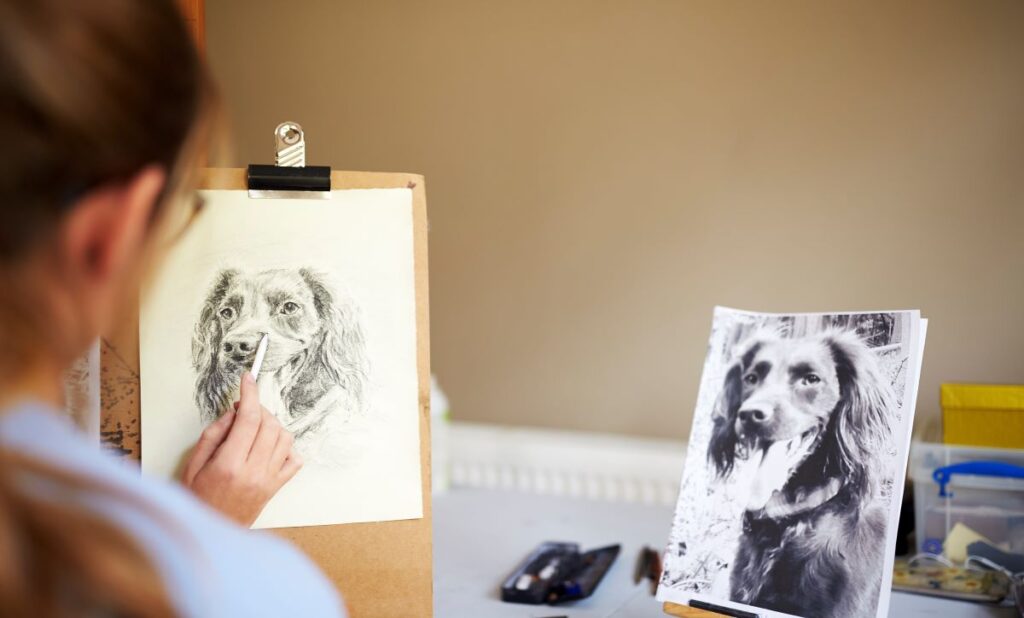
Tools and Materials Needed for Sketching
Pencils
- Range from soft (B, 2B, 4B) to hard (H, 2H)
- Softer pencils create darker, richer lines; harder pencils are for light outlines
Paper Types
- Sketch pads, drawing paper, or any smooth paper
- Textured paper works better for charcoal or shading
Charcoal
- Ideal for expressive sketches and rich shadows
- Can be smudged for blending effects
Erasers
- Standard erasers for corrections
- Kneaded erasers for lifting graphite without damaging paper
Digital Sketching Tools
- Tablets, styluses, and software like Procreate or Adobe Fresco
- Useful for beginners and professionals who prefer digital workflows
Step-by-Step Guide to Creating Your First Sketch
[Image suggestion: Step by step sketching process]
- Choosing a Subject
Pick a simple object, plant, or reference photo. Avoid complex scenes initially to focus on learning proportions and lines. - Rough Outline
Lightly draw basic shapes to establish composition and proportions. Think of this as a skeleton for your sketch. - Refining Proportions
Adjust lines and angles to ensure accuracy. Beginners often struggle with correct placement of key features, so take your time here. - Adding Details
Gradually include smaller elements, textures, or facial features for portraits. Use light strokes for easy corrections. - Final Touch-Ups
Darken key lines, add shading or highlights, and clean smudges. Step back and review your sketch before calling it complete.
Common Sketching Mistakes Beginners Make
- Over-detailing Early: Adding too many details before proportions are correct
- Ignoring Proportions: Skipping measurements or references leads to distorted sketches
- Heavy Pencil Pressure: Makes corrections difficult and lines look harsh
- Skipping Practice: Inconsistent sketching slows skill development
Tips to Improve Your Sketches Faster
- Daily Sketch Habit: Even 10–15 minutes a day improves observation and hand control
- Studying References: Draw from real objects, photos, or master artworks
- Practicing Light Strokes: Easier to correct and refine lines
- Reviewing Old Sketches: Identify areas of improvement and track progress
Conclusion
Mastering sketches is a crucial step for anyone looking to improve their artistic skills. Sketches allow you to experiment freely, understand proportions, and plan complex paintings and portraits without the pressure of perfection. By practicing regularly, learning from mistakes, and using the right tools, beginners can build confidence and gradually advance to detailed artworks. Remember, every professional artist started with simple sketches—consistency and observation are the keys to improvement. With this guide, you now have a clear roadmap to start sketching effectively, avoid common pitfalls, and steadily enhance your skills.
Frequently Asked Questions
1. What is the difference between a sketch and a drawing?
A sketch is a preliminary or rough representation, while a drawing is more polished and detailed. Sketches are often used to plan a final artwork, whereas drawings are usually complete pieces with refined lines and shading.
2. Do I need expensive tools to start sketching?
No, beginners can start with basic pencils and sketch paper. Quality improves with practice, and inexpensive materials are sufficient for learning fundamental techniques.
3. How long should I spend on my first sketches?
Start with 10–30 minutes per sketch. Short sessions prevent frustration, improve focus, and help develop steady habits without overwhelming beginners.
4. Can sketches help with painting and portraits?
Yes, sketches act as blueprints. They allow you to plan composition, refine proportions, and visualize details before committing to a full painting or portrait.
5. How do I fix proportion mistakes in sketches?
Use light pencil lines for adjustments, check measurements with reference points, and step back to view the sketch from a distance to identify inaccuracies.
6. Are digital sketches as effective as traditional sketches?
Digital sketches are equally effective for learning and concept development. Tablets and software provide easy correction options, layers, and blending tools, making experimentation safe and flexible.
7. How can I make my sketches more realistic?
Focus on observation, study light and shadow, practice shading techniques, and refine proportions. Using references and breaking subjects into basic shapes also helps realism.
8. Can sketching improve my overall art skills?
Absolutely. Sketching develops hand-eye coordination, understanding of forms, perspective, and anatomy. It also builds confidence to create more complex paintings and portraits.
Related Articles from PaintersDiary
- Top Watercolor Painting Techniques Every Beginner Should Master
- Best Beginner Acrylic Painting Techniques Every Artist Should Master
- Expressionism vs. Abstract Art: What’s the Difference and Which Should You Try?